
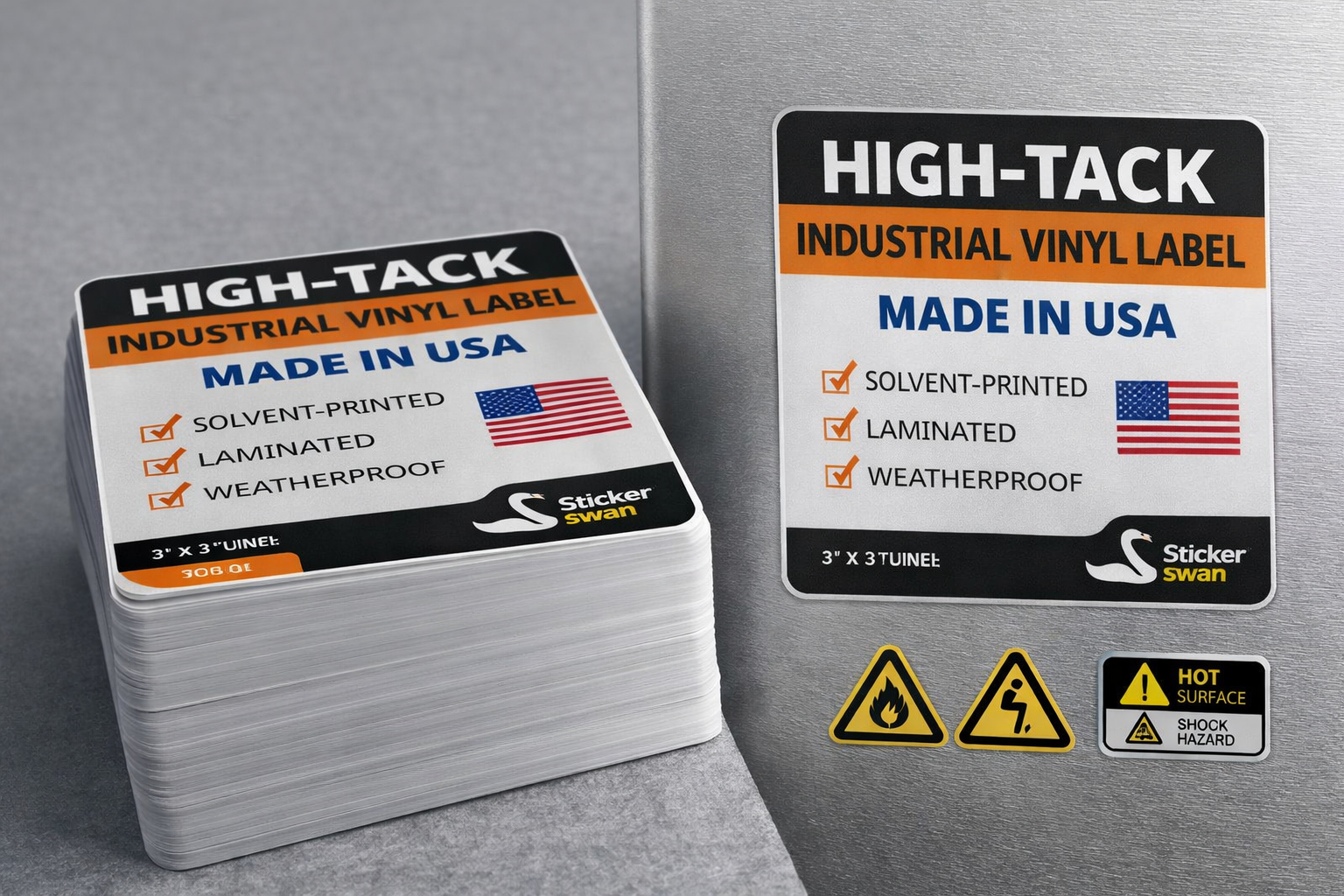
Certified, High-Tack, Solvent-Printed Labels for HVAC, Electrical & Plumbing Use
In mechanical rooms, electrical enclosures, and industrial environments, labels don’t fail because of age — they fail because of heat, moisture, and chemical exposure.
Plumbers, electricians, and HVAC manufacturers require industrial-grade labels that remain legible, adhered, and compliant long after installation. This is where high-tack vinyl, solvent inks, and protective laminates matter.
Why Labels Fail in Trade Environments
Standard consumer stickers are not engineered for:
- Heat cycling from HVAC equipment
- Condensation and humidity
- Oils, solvents, and cleaning chemicals
- Long-term adhesion to metal and plastics
Once a label peels, fades, or blurs, it creates:
- Safety risks
- Service errors
- Callbacks
- Non-compliance issues
Industrial labels solve this at the material level, not with shortcuts.
Certified Industrial Label Construction (Material Stack)
Our industrial labels are produced using a multi-layer system designed for professional trade use:
- High-tack calendered PVC vinyl
- Solvent-based ink system
- Clear protective over-laminate
Each layer plays a specific role in durability, adhesion, and longevity.
Certifications & Compliance (Base Material)
The high-tack vinyl used in this system is certified for marking and labeling applications:
- UL 969 – Marking and Labeling Systems (USA)
- CSA C22.2 No. 0.15 – Adhesive Labels (Canada)
These certifications are commonly required for permanent equipment identification in electrical, HVAC, and industrial manufacturing environments
Temperature Resistance (Installed on Metal Surfaces)
High-Tack Vinyl Film
-
Temperature resistance:
–58°F to +212°F (adhered to aluminum, no variation)
This range covers:
- HVAC housings
- Electrical panels
- Mechanical rooms
- Utility and service areas
Protective Over-Laminate
-
Temperature resistance:
–40°F to +176°F (adhered to aluminum, no variation)
The laminate protects the printed surface from abrasion, moisture, and chemical exposure while maintaining thermal stability.
Fire Behavior & Safety Classification
When applied to metal surfaces, both the vinyl film and laminate meet self-extinguishing fire behavior standards:
- Fire behavior: Self-extinguishing (adhered to steel)
- ASTM E84-07: Class A
This classification is commonly specified for materials used in:
- Electrical enclosures
- HVAC equipment housings
- Mechanical and utility rooms
Solvent Printing: Why It Matters
Solvent inks chemically bond to the vinyl surface instead of sitting on top like water-based inks.
Key advantages:
- Superior heat resistance
- Improved chemical and oil resistance
- Long-term color stability
- Excellent adhesion under laminate
- Reduced cracking or peeling over time
For industrial labeling, solvent printing remains the gold standard.
Water, Chemical & Oil Resistance (System Performance)
When solvent ink is sealed under a protective laminate, the label system resists:
- Condensation and humidity
- Oils and lubricants
- Degreasers and cleaners
- Routine industrial handling
This makes the labels suitable for plumbing, electrical, HVAC, and industrial maintenance environments.
Longevity & Life Expectancy (Indoor Use)
Based on material specifications and accepted application procedures:
- Expected indoor lifespan: 10+ years
- Minimum rated durability: 4–5 years depending on exposure and configuration
Actual lifespan depends on:
- Surface preparation
- Environmental exposure
- Cleaning frequency
- Abrasion
Application Guidelines (Important)
- Designed for equipment identification, instructional, and safety labeling
- Intended for adjacent placement on equipment housings and panels
- Not intended for direct contact with heating elements or open flame
- Minimum application temperature:
- Vinyl: 32°F
- Laminate: 46°F
Technical FAQ
Are these labels UL listed?
The base vinyl film is UL 969 certified for marking and labeling systems. Final label compliance depends on application and equipment certification requirements.
Can these labels be used in HVAC and electrical equipment?
Yes. They are commonly used on equipment housings, panels, and enclosures where long-term durability and legibility are required.
What temperature can these labels withstand?
The vinyl layer is rated up to 212°F, while the laminate layer is rated up to 176°F when adhered to metal surfaces.
Are the labels waterproof?
Yes. The vinyl construction and laminate protection make the labels waterproof, suitable for condensation and moisture-prone environments.
Why solvent ink instead of water-based ink?
Solvent inks offer superior resistance to heat, chemicals, and abrasion and chemically bond to the vinyl surface for long-term durability.
The Bottom Line
If your labels must survive heat, water, chemicals, and long-term use, consumer-grade stickers are not sufficient.
Industrial labels built with:
- High-tack vinyl
- Solvent-based inks
- Protective laminate
Deliver reliability, compliance, and longevity in real trade environments.
For HVAC, electrical, and plumbing applications, industrial labels aren’t optional — they’re essential.
👉 Ready to upgrade?
Choose industrial vinyl labels engineered for professional use, long-term performance, and Made-in-USA quality.
Share:
Industrial Vinyl Labels for Plumbers, Electricians & HVAC
Cheap Custom Stickers: What 100 Stickers Really Cost in 2026 (No Clickbait)